Made by Abbott
Lingo Continuous
Glucose Monitor
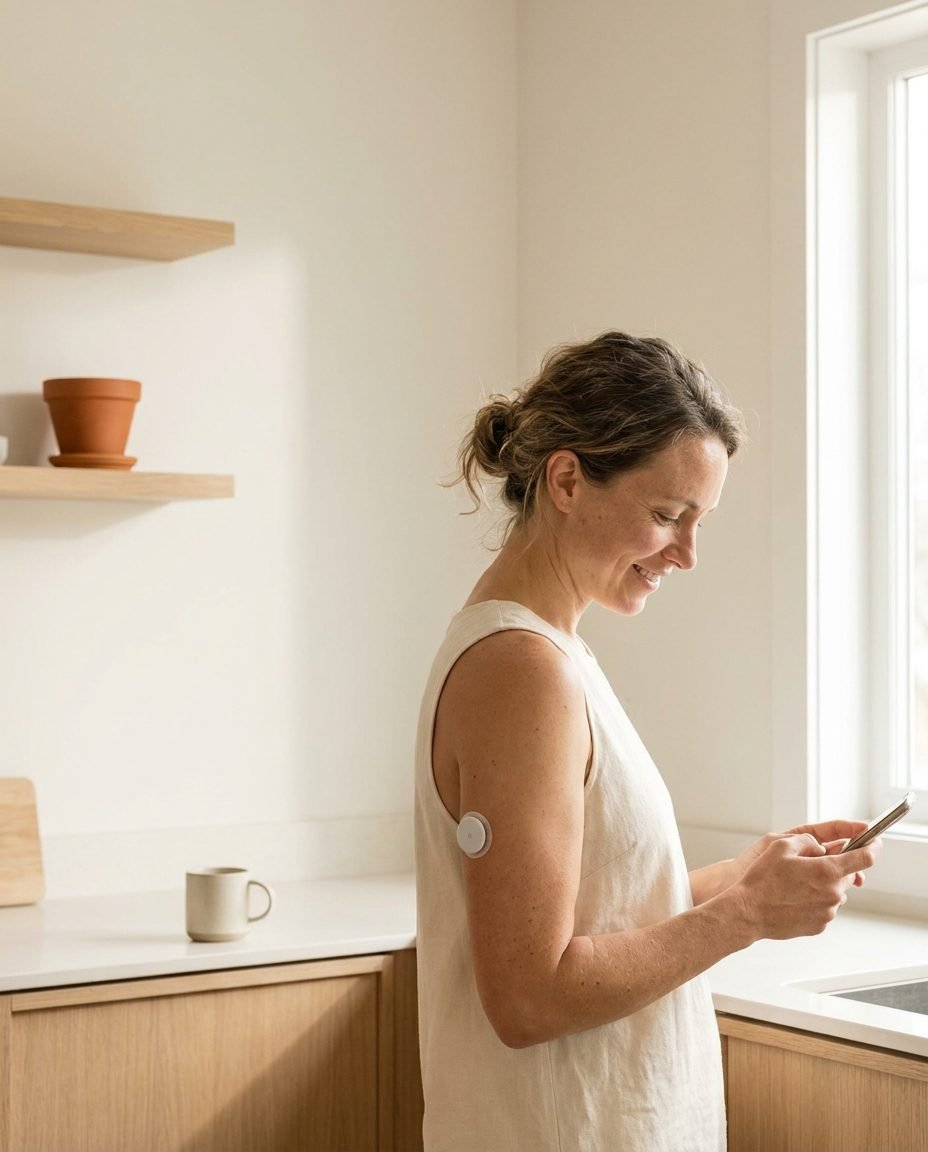
A coin-sized biosensor that reads your glucose every minute for up to 14 days and streams it straight to your phone. No fingersticks, no guessing — just a clear picture of how your body actually responds to what you eat.
- Real-time reading every minute
- Up to 14 days per biosensor
- No fingersticks, no charging
- Water-resistant, wear it anywhere
- Lingo Count™ daily metric
- iOS & Android, syncs to Health
Current price and availability are shown on the Amazon listing.
For adults 18+ who are not on insulin.
Know the impact of what you eat
You eat well, sleep enough, and still hit the wall at 3 p.m.
Two people can eat the exact same oatmeal and get opposite results in their bloodstream. Nutrition labels describe the food. They say nothing about your body. Without data, you are optimising in the dark.
The crash you blame on “being tired”
A sharp rise is usually followed by a sharp drop. That drop is often what you feel as brain fog, irritability and the sudden hunt for something sweet.
“Healthy” is not the same as “healthy for you”
Rice, grapes, granola, a smoothie — some barely move your line, and some send it through the roof. You can’t know which until you look.
Advice that was never about you
Most nutrition advice is written for an average person who doesn’t exist. Your own 14 days of data beats a generic rule every single time.
The technology
A filament thinner than a hair, reading you every sixty seconds.
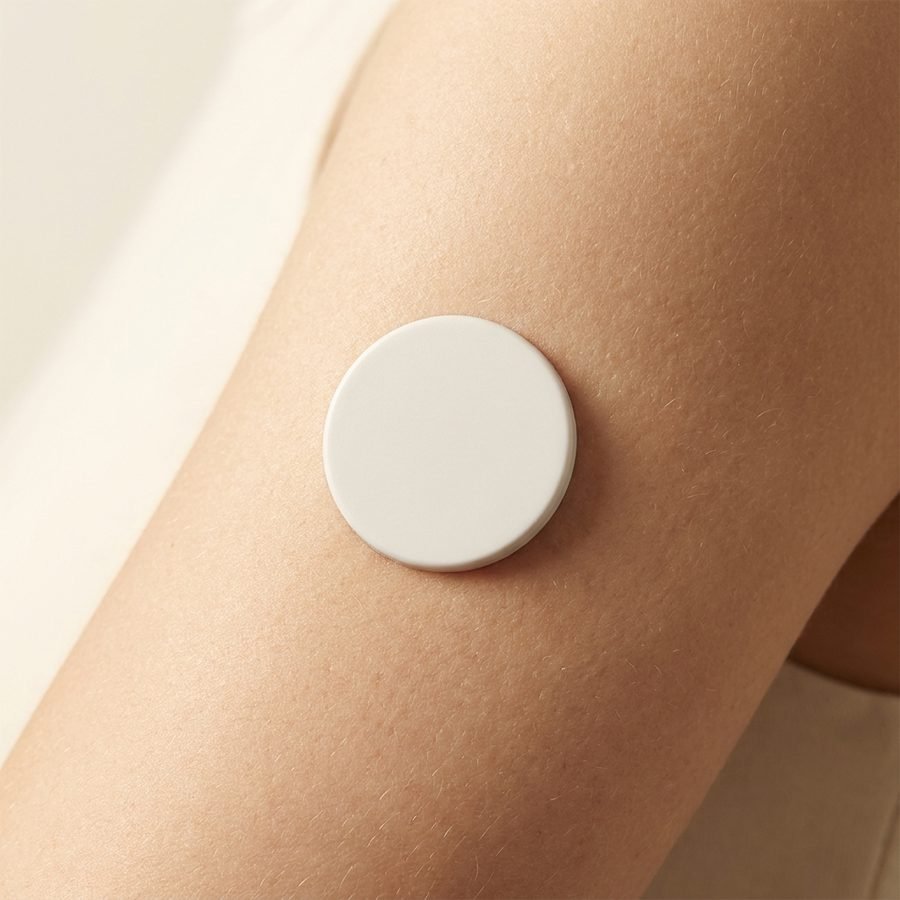
The biosensor sits on the back of your upper arm. Beneath it, a tiny filament rests just under the skin and measures glucose in your interstitial fluid — continuously, day and night, without a single fingerstick.
Continuous biosensing
A reading every minute, streamed over Bluetooth to your phone. The sensor is water-resistant and never needs charging during its wear period.
Lingo Count™
A proprietary daily metric that weighs every glucose rise by how large it was and how long it lasted, then turns your whole day into one number with a personal target.
Weekly insight reports
The app links the meals and activities you log to what your curve actually did, then turns the pattern into science-backed challenges you can try the following week.
How to use it
Three steps. Then your body does the talking.
Apply the biosensor
A one-press applicator places the sensor on the back of your upper arm. Most people report they barely feel it. Shower, swim and sweat as usual.
Watch your glucose live
Pair it with the Lingo app and readings start arriving every minute. Log a meal or a workout and see exactly what it did to your curve.
Change one habit at a time
Use the weekly report and the Lingo Count to keep what works for your body and quietly drop what doesn’t.
One Lingo biosensor is designed to last up to 14 days. In Abbott’s own testing, 77.1% of biosensors lasted the full 14 days, and Lingo offers a biosensor replacement promise if yours stops early. Requires a compatible smartphone. Available in the US only.
One number, not a spreadsheet
A messy day, turned into a score you can actually beat.
Instead of asking you to interpret a wall of squiggles, the app adds up every glucose rise — weighted by how big it was and how long it lasted — into a single daily number with a personal target. Lower is better. Tomorrow you try to beat today.
- A target, not a verdict. A daily goal calibrated to you, so progress is visible in days rather than months.
- Cause and effect, same day. Log the pasta, see the curve. That feedback loop is what actually changes behaviour.
- Syncs with your phone. Apple Health and Health Connect pick it up automatically.
Lingo Count is a wellness engagement metric. It is not a medical diagnosis, not a metabolic grade, and not a substitute for lab work or medical advice. Value shown is illustrative.
Same breakfast, different bodies
This is the part no calorie app can tell you.
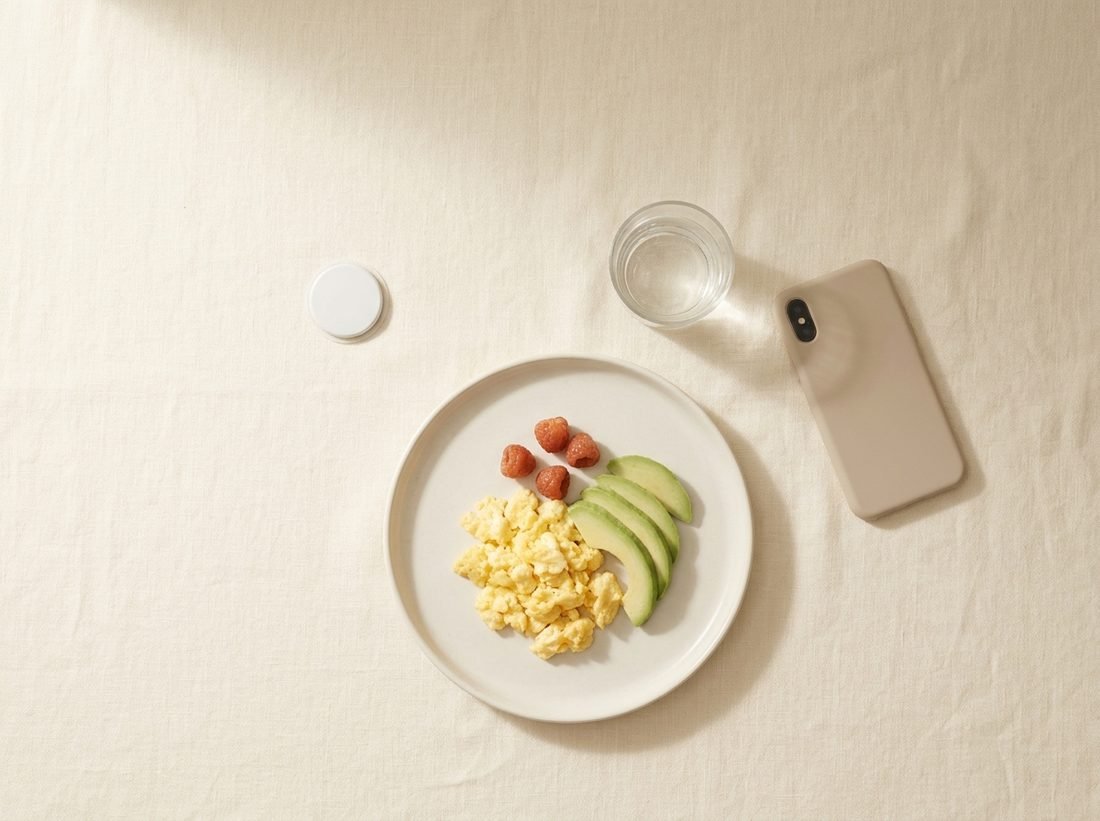
Identical meals produce very different glucose responses in different people — and even in the same person on different days. Order, timing and what you do afterwards all move the line. Tap between the two responses below.
Cereal with juice on an empty stomach. Fast rise, faster fall — and about ninety minutes later, the fog, the yawn and the craving. Nothing “went wrong”. This is simply what that combination does in this body.
Same calories, reordered: protein and fibre first, a ten-minute walk after. The curve flattens, the crash never arrives, and the afternoon belongs to you again. That’s the whole game — and you can only play it if you can see the line.
Illustrative examples based on patterns reported in the research below, not data from a specific user. Individual responses vary.
How it compares
Continuous data vs. a single snapshot.
A factual comparison of what each method can and cannot show you. All three have their place — they just answer different questions.
| Lingo biosensor | Fingerstick meter | Food tracking app | |
|---|---|---|---|
| Readings per day | Around 1,440 — one per minute | As many as you prick for | None — you log, it estimates |
| Shows the shape of a response | Yes — the full curve, rise and fall | Only the moment you tested | No |
| Overnight and while you sleep | Yes, automatically | Only if you wake up to test | No |
| Blood draw required | No | Yes, every reading | No |
| Personalised to your body | Yes — measures you, not an average | Yes, at single points in time | No — uses population averages |
| For diagnosing or managing diabetes | No — wellness use, adults not on insulin | Depends on the device and your doctor | No |
Comparison of general product categories, based on how each method works. It is not a comparison against any specific competing brand or model.
Straight answer
Lingo is not for everyone. Here’s the honest split.
We would rather you skip this than buy the wrong thing. Read the right-hand column first.
✓ A good fit if you…
- Want to know which foods actually work for your body, not for an average one
- Are chasing steadier energy, better focus or fewer afternoon crashes
- Train, cut, bulk or fast and want objective feedback instead of vibes
- Like data and will actually open the app and log a meal
- Are 18 or older, live in the US, and have a compatible iPhone or Android phone
! Not for you if you…
- Use insulin — Lingo is not intended for people on insulin therapy
- Are looking to diagnose or manage diabetes: Lingo is a wellness product, not a diagnostic device
- Have an eating disorder or a history of one — constant food data can make things worse
- Are under 18, or want this to replace advice from your doctor
- Want a one-time reading — this is a 14-day learning tool, not a test strip
Rooted in research
Why continuous data changes what you can learn.
We would rather show you peer-reviewed work than a wall of star ratings. These four papers are about glucose responses in general — not about Lingo, and not evidence of any specific result for you. Read them yourself.
Personalized Nutrition by Prediction of Glycemic Responses
Researchers monitored 800 people for a week across nearly 47,000 meals and found high variability in the response to identical foods — suggesting universal dietary advice has limited utility.
doi:10.1016/j.cell.2015.11.001Glucotypes reveal new patterns of glucose dysregulation
Using continuous glucose monitoring, the authors found distinct patterns of glucose response — “glucotypes” — that vary widely between individuals given an identical nutrient challenge.
doi:10.1371/journal.pbio.2005143Food Order Has a Significant Impact on Postprandial Glucose and Insulin Levels
A pilot study finding that the order in which carbohydrate is eaten within a meal significantly changes the post-meal glucose and insulin excursion.
doi:10.2337/dc15-0429Interrupting Prolonged Sitting with Standing and Light-Intensity Walking
A systematic review and meta-analysis reporting that short, frequent activity breaks attenuate post-meal glucose, with light-intensity walking outperforming simply standing.
doi:10.1007/s40279-022-01649-4These studies are independent scientific literature on glucose physiology. They were not conducted on Lingo, are not endorsements of Lingo, and do not establish that any particular outcome will occur for you.
Questions people actually ask
Before you buy
Does it hurt to put on?
The biosensor applies to the back of your upper arm with a single press. What sits under the skin is a very fine filament, not a needle you keep in view. Most people describe the application as a brief press with little or no pain, and then forget it’s there. Some skin sensitivity or adhesive irritation is possible.
How long does one biosensor last, really?
Each biosensor is designed to run up to 14 days. Abbott’s own testing reported that 77.1% of biosensors lasted the full 14 days — meaning roughly one in four may stop early. Lingo offers a biosensor replacement promise in that case; check the current terms on the manufacturer’s site before buying.
Do I need a prescription?
No. Lingo is sold over the counter in the United States for adults 18 and over who are not using insulin. It is a general-wellness product, not a prescription diabetes device.
Can I wear it in the shower, the pool or the gym?
Yes — the biosensor is water-resistant and designed to be worn through showering, swimming and sweating. It streams over Bluetooth and never needs charging during its wear period.
What do I actually do with the data?
The point is not to stare at a graph. You run small experiments: eat protein before carbs, walk ten minutes after dinner, move the late snack earlier — and watch the Lingo Count respond. After two weeks you have a short personal list of what works, and that list outlives the sensor.
Is this the same as a medical CGM for diabetes?
No. Lingo is built for health and wellness, for adults not on insulin, and it is not intended for diagnosing or managing diabetes. If you have or suspect a metabolic condition, that is a conversation with your doctor, not a purchase decision.
How much is it, and how do shipping and returns work?
Lingo is available on Amazon in single and multi-pack options. Pricing and stock move, so rather than quote a number that may be wrong by the time you read this, the Buy Now button sends you straight to the live listing. Shipping, delivery estimates, returns and refunds are all handled by Amazon under Amazon’s own policies — we are not the seller.

Fourteen days
You can keep guessing,
or you can just look.
Two weeks of real data about your own body is a small experiment with a long shelf life. Check the current price and availability on Amazon.
Buy Now →Sold and shipped by Amazon · US only · Adults 18+, not on insulin